Paver Patio Built With Drainage That Actually Works
Water problems are one of those things homeowners tend to ignore until they can't anymore. Pooling water, soggy ground, muddy patches right outside the back door - it creates a mess and it doesn't go away on its own. That's exactly the kind of situation we walked into on this one.
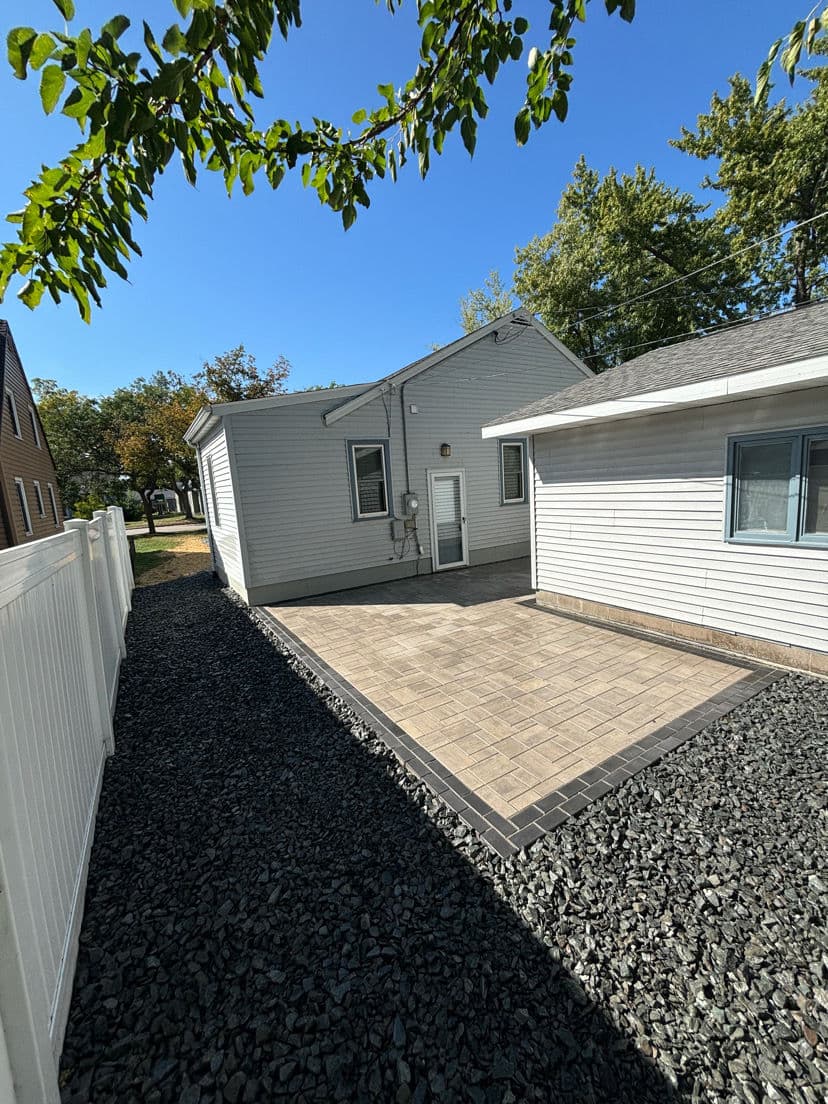
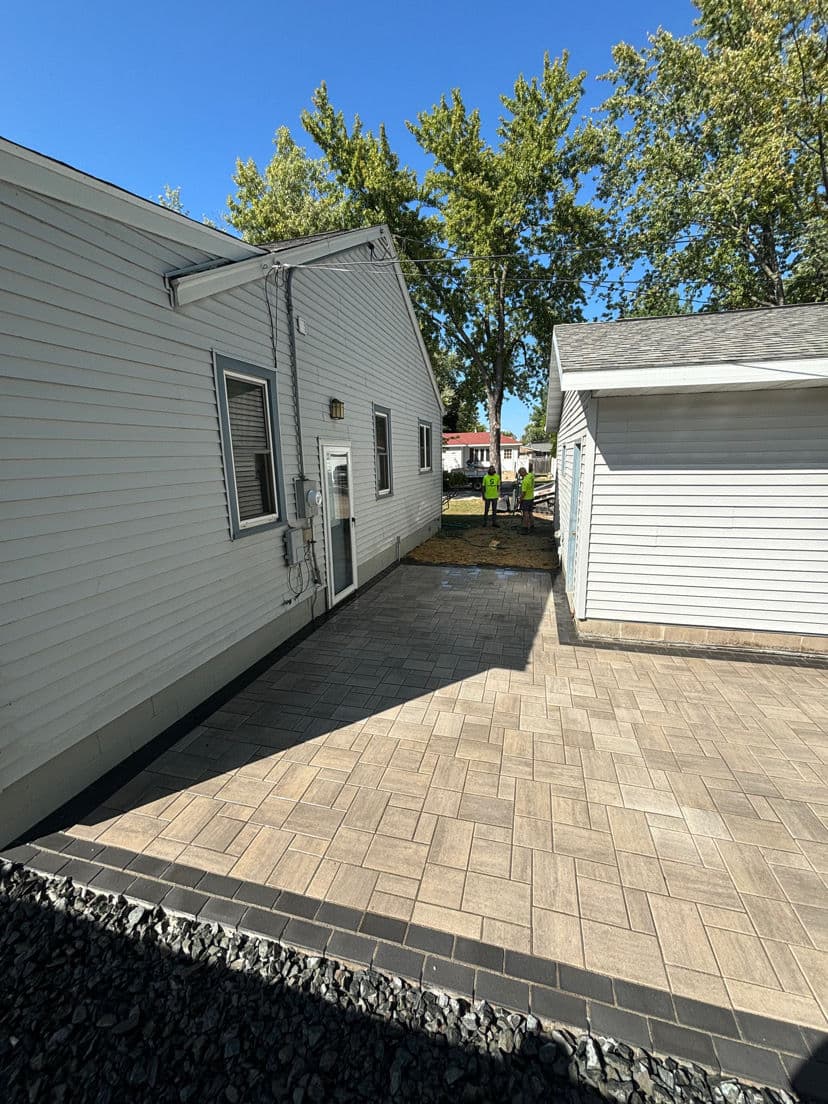
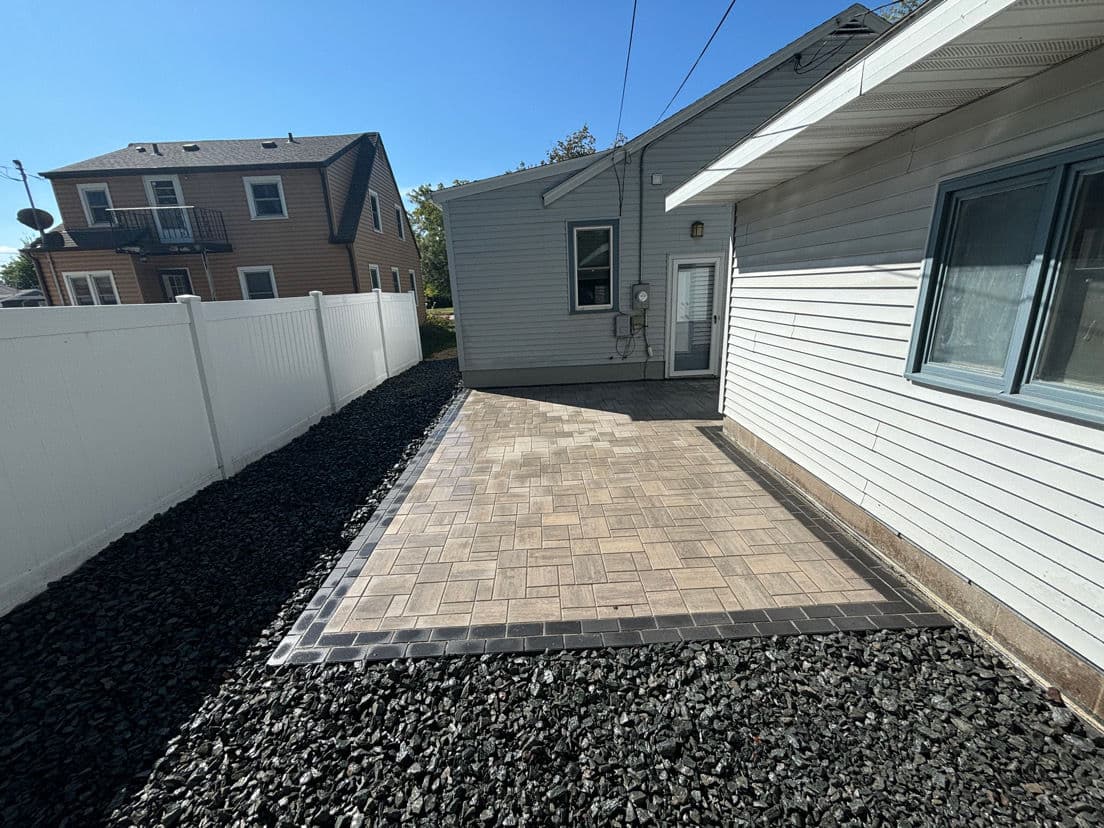
The goal here was dual-purpose: build a clean, solid paver patio the homeowner could actually use, and solve the drainage issue underneath at the same time. A lot of people focus on how a patio looks and skip the part about what's happening below the surface. We don't do that. The base work and grading are just as important as the pavers sitting on top.
We laid a patterned paver field with a darker border course around the perimeter - a simple detail that gives the whole surface a finished, intentional look. Surrounding the patio, we brought in black crushed stone to fill the space between the patio edge and the fence line. That stone isn't just there to look clean. It helps water move away from the structure instead of sitting against the foundation or turning the yard into a swamp after rain.
That's the thing about good landscaping work - it has to make sense from the ground up. The surface you see is only part of the story. When the planning goes into drainage first, everything built on top of it holds up better and lasts longer. It's the difference between a patio that looks good for a season and one that still looks good years down the road.
We take that approach on every paver patio we install. Understanding how water behaves on a specific property before the first paver goes down is what separates a solid job from one that causes headaches later. This one was built right from the start.