Paver Patio Extension and Fire Pit Built to Handle a Sloped Backyard
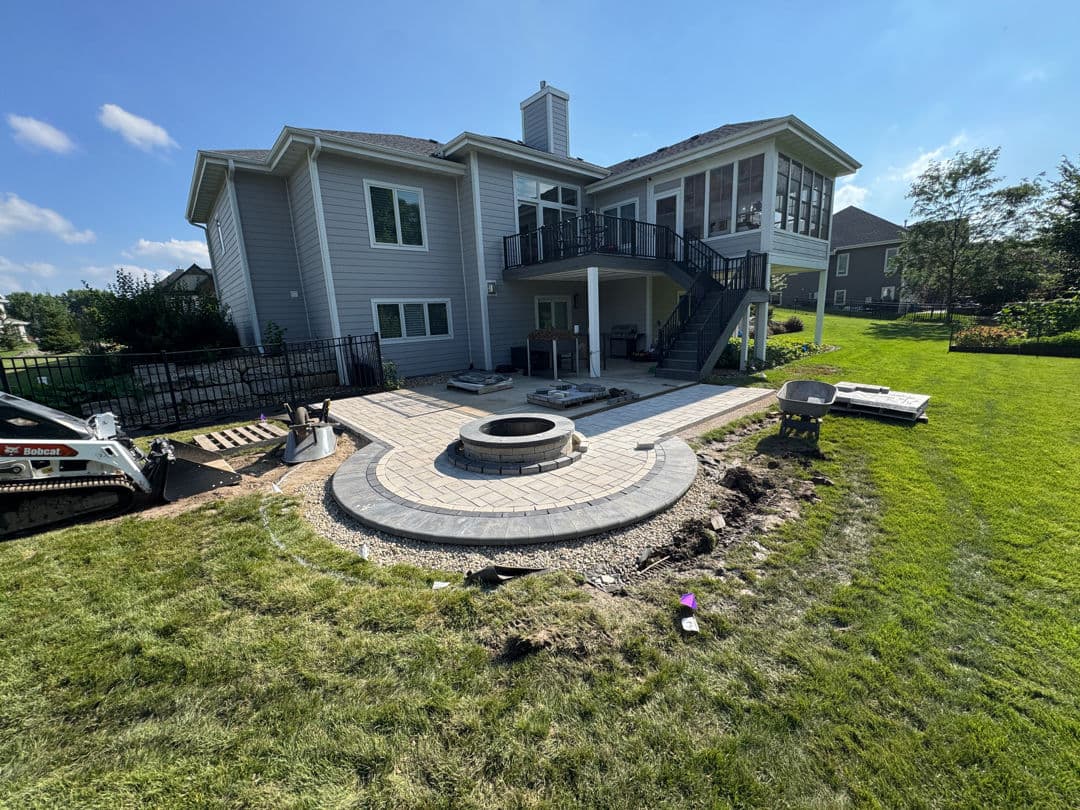
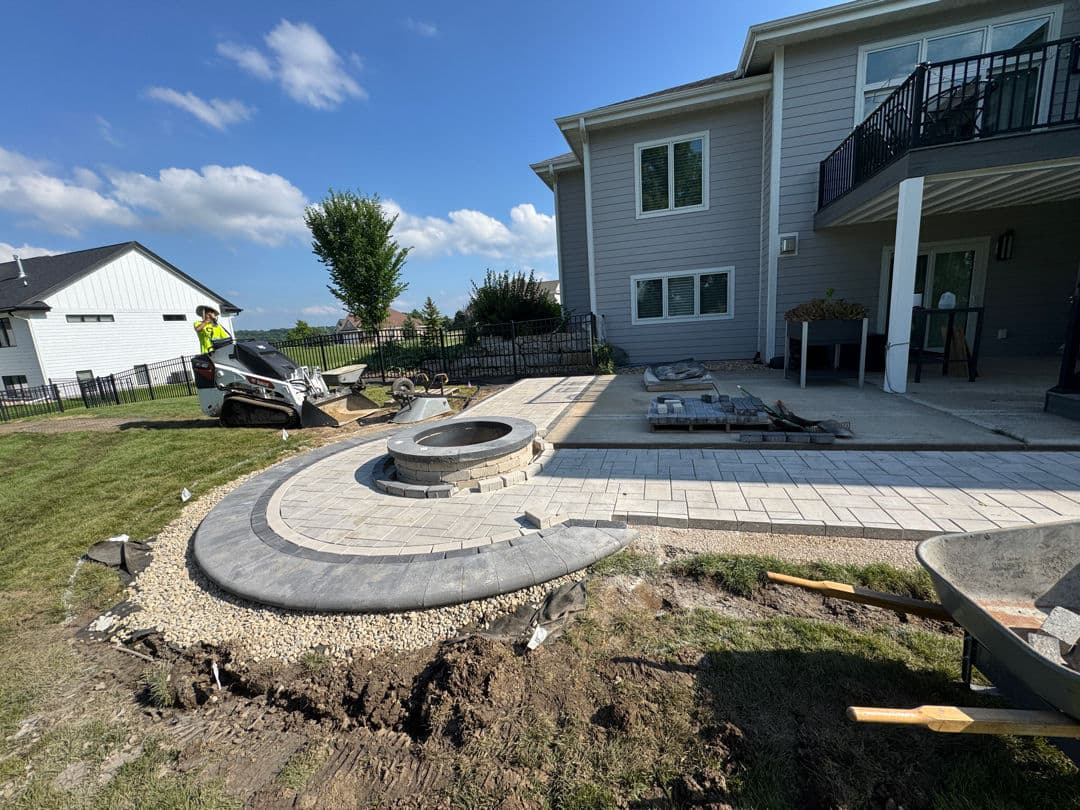
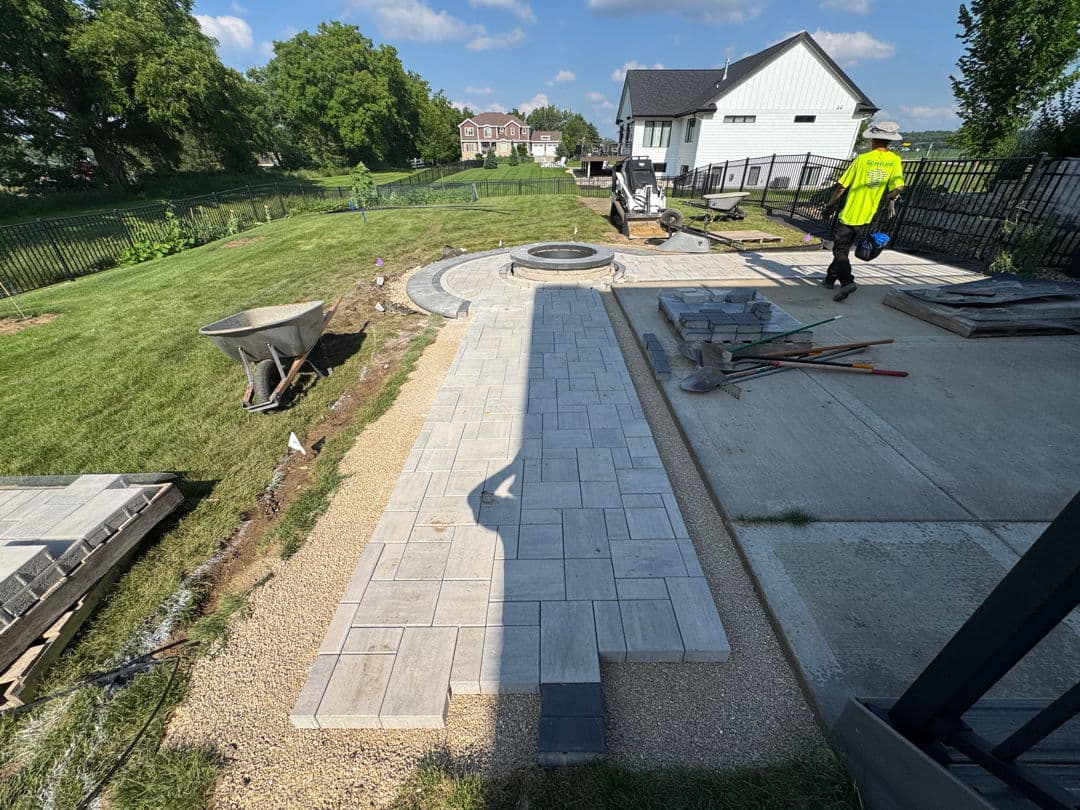
Sloped backyards are one of the trickier situations we run into. If you don't plan around the grade change from the start, you end up with either a steep drop-off at the patio edge or you lose a big chunk of usable lawn just to flatten things out. Neither is a great outcome.
On this job, we used wall block and coping to manage the elevation change in a way that keeps the patio sitting at the right pitch - proper drainage, no pooling - while leaving as much flat, open lawn as possible for the homeowner. That balance between hardscape and usable green space is something we think about on every design.
The patio extension steps down and flows out into a rounded fire pit area with a circular paver surround. The layered layout gives the space a real sense of purpose - there's a zone for the fire pit, a zone that connects back to the house, and a gravel border that wraps the whole thing cleanly. It's not just good-looking. It's functional from every angle.
This is also a good example of what it looks like when a paver patio project is built the right way from the ground up. The base work, the grading, the wall block detail - none of that is visible once everything is finished, but it's exactly what determines how the patio holds up over time. Cut corners on any of it and you'll be dealing with shifting, settling, or drainage issues down the road.
Good outdoor living spaces don't just happen. They're designed and built with the long game in mind. That's what we're going for on every paver patio we put in.